
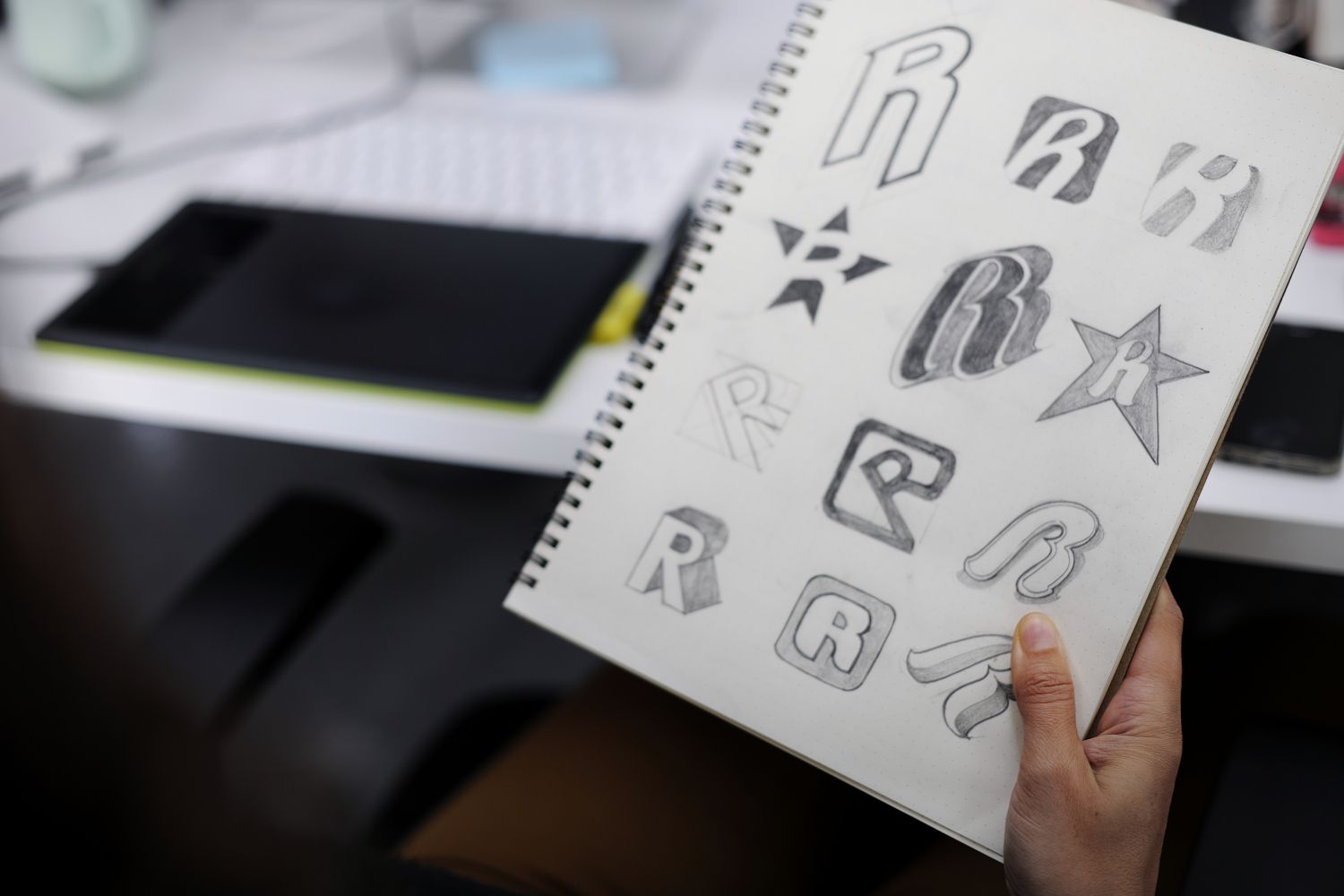
Every great brand started with an idea. And its first visual manifestation, its first whisper in a world screaming for attention, was the logo. It is not merely a graphic element. It is a concentrate of philosophy, a manifesto of values, the face you will see again and again. It has the power to tell complex stories in fractions of a second, becoming the anchor that keeps the brand ship afloat in the ocean of information.
Look at familiar logos. The apple, symbolizing innovation, simplicity, and boldness. The swoosh, calling for action, overcoming the limits of possibility. They don’t just decorate products; they settle in our consciousness, becoming part of our experience. Imagine a logo as the artist’s signature on their painting. It’s small, yet it is what gives the work its completeness and authenticity.
Creating a logo is like writing a poem. Every element—line, curve, color, font—holds meaning. Too much detail, and it loses its magic. Too little, and it feels empty. It is the search for that perfect balance where simplicity meets depth, and aesthetics meets functionality. The designer, when creating a logo, becomes not just an artist but a strategist. They must anticipate how the logo will look on a business card and on a billboard, how it will feel in the consumer’s hands, and how it will appear in the virtual space.
The Logo as Archetype
It must contain universal meanings that speak to the subconscious. This could be a circle—a symbol of integrity and perfection; or a triangle—a symbol of stability and progress. Sometimes, it can be an abstract shape that means nothing on the surface but emotionally resonates with the audience.
The logo is not the final chord, but merely the first note in the brand’s symphony. Yet, it sets the tone for the entire composition. It is your promise, your handshake, your sign of trust. And if it is created with soul, it doesn’t just identify—it inspires, building a bridge between the company and its customers that will last for years.